
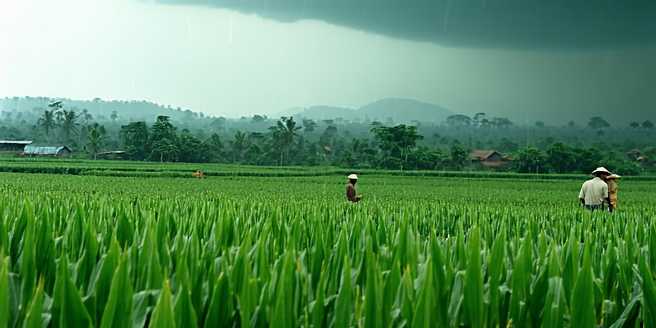
Understanding Climate Variability’s Impact on Agriculture
Climate variability introduces unpredictability in weather patterns, directly affecting agricultural productivity. Farmers encounter challenges such as altered rainfall timings, prolonged droughts, and increased frequency of extreme weather events. This unpredictability necessitates adaptive strategies, often requiring significant shifts from traditional farm management practices. Successful adaptation involves integrating modern techniques like crop rotation, soil moisture conservation, and the selection of drought-resistant crop varieties. Additionally, education and access to timely weather data become crucial for rural communities to plan effectively. Investing in agricultural technology and infrastructure enhances resilience, ensuring sustained productivity even amid changing climate patterns. However, lack of resources and knowledge remains a barrier for many rural farmers, highlighting the urgent need for targeted support.
Water Resources: Challenges and Adaptations in Rural Areas
Water scarcity is a pressing issue exacerbated by climate variability. Rural areas often face irregular water supply, threatening both domestic use and agricultural operations. Increased evaporation rates, reduced river flows, and declining groundwater levels necessitate innovative adaptation measures. Communities must adopt water-saving techniques such as rainwater harvesting, improved irrigation management, and the development of small-scale water storage facilities. These strategies help mitigate the impact of water shortages on livelihoods. Collaboration between local authorities, farmers, and water management experts is vital to ensure sustainable practices. Education campaigns focusing on efficient water use further empower communities to adapt. Nevertheless, limited financial and technical resources pose challenges, underscoring the importance of external assistance and investment.
Ecosystem Changes: Effects on Rural Biodiversity
Alterations in climate patterns significantly impact rural biodiversity. Shifts in temperature and precipitation influence the abundance and distribution of local flora and fauna. As a result, some species struggle to survive, while others may thrive, leading to changes in ecosystem dynamics. This imbalance poses a threat to local biodiversity, potentially resulting in the loss of valuable species. Maintaining biodiversity is crucial for ecosystem services like pollination, soil health, and pest control, which directly support rural livelihoods. Conservation efforts, such as establishing protected areas and restoring habitats, become essential in mitigating these impacts. Additionally, community involvement through citizen science projects can enhance monitoring and conservation efforts. Empowering local communities to participate in conservation initiatives ensures sustainable and resilient ecosystems.
Economic Implications of Climate Variability on Livelihoods
Climate variability presents economic challenges for rural communities reliant on agriculture and natural resources. Fluctuations in crop yields and livestock productivity result in unstable income streams. This economic uncertainty forces households to engage in alternative livelihoods or migrate to urban areas in search of better opportunities. To mitigate these impacts, diversifying income sources through activities like agro-tourism, handicrafts, and value-added agricultural products is essential. Access to microfinance services can provide initial capital for such ventures. Additionally, insurance schemes tailored for climate-related risks can offer financial security. Investing in education and skill development enhances opportunities for rural youth, reducing their vulnerability to economic shocks. Collaborative efforts between government, NGOs, and local communities are crucial for developing resilient economic strategies.
Community Strategies for Building Resilience
Building resilience against climate variability requires community-led strategies. Local knowledge and traditions play a vital role in understanding and addressing the impacts. Implementing community-based resource management fosters collaboration, ensuring sustainable use of resources. Initiatives like community gardens, training in climate-smart agriculture, and cooperative farming bolster food security. Social networks and support groups provide emotional and practical assistance, especially during extreme weather events. Participatory planning involving diverse community members ensures that adaptation strategies are inclusive and effective. Enhancing local governance structures empowers communities to take collective action. Continuous knowledge exchange through workshops and seminars fosters innovation and adaptation. These community-driven approaches build a robust foundation for resilience, enabling rural areas to withstand climate-induced challenges.
Policy Interventions to Support Rural Communities
Policymakers play a crucial role in supporting rural communities facing climate-related challenges. Effective policy interventions must focus on providing financial resources, technical support, and infrastructure development. Implementing subsidies for climate-resilient crops and renewable energy sources incentivizes sustainable practices among farmers. Legal frameworks for land and water use must accommodate changing conditions, ensuring equitable access for all community members. Strengthening disaster response mechanisms reduces vulnerability during extreme weather events. Additionally, fostering climate education and awareness programs ensures informed decision-making at the community level. Partnerships between government institutions, NGOs, and international bodies are essential for comprehensive policy development. Continuous monitoring and evaluation of implemented policies ensure their effectiveness and adaptability to evolving climate conditions.