
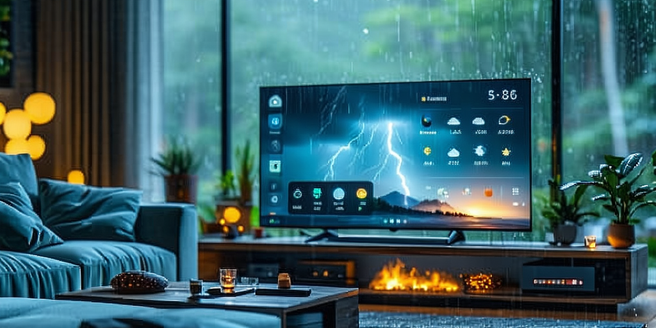
The Benefits of Linking Home Automation to Weather Data
Linking home automation to weather data offers a multitude of benefits that enhance both comfort and energy efficiency in homes. By integrating weather forecasts with smart devices, homeowners can automate lighting, heating, and cooling based on real-time weather conditions. For example, blinds can adjust automatically to reduce glare and heat in summer or open up to allow warming sunlight during winter, thus optimizing energy usage. Such integration can lead to significant savings on utility bills by ensuring that home systems operate only when necessary. Additionally, it enhances comfort by maintaining indoor climates catered to individual preferences without manual intervention. These systems can also protect homes by automating security features in adverse weather, offering peace of mind during storms or unexpected weather events.
Essential Weather Sensors for Smart Homes
To fully optimize a smart home, incorporating essential weather sensors can make a significant difference. These sensors collect valuable data to perfect home automation systems. Temperature sensors, for instance, connect with HVAC systems to regulate heating and cooling based on current outdoor conditions. Humidity sensors can trigger dehumidifiers or humidifiers to maintain indoor air quality. Rain sensors can be hooked up to irrigation systems, preventing waste when rainfall is sufficient. Wind sensors assist in automatically securing outdoor fixtures and retracting awnings during gusty conditions. Other sensors like barometers and weather stations provide comprehensive data to further refine home automation scripts. By strategically setting these sensors, a home can run with precision, ensuring comfort, conserving energy, and reducing wear on appliances while effortlessly adapting to changing weather.
Choosing the Right Home Automation System
Selecting the ideal home automation system tailored to integrate with weather data requires careful consideration of several factors. It’s essential to evaluate your specific needs, such as how weather impacts your locale and home. Opt for a system that’s compatible with various weather sensors and can integrate with third-party applications for detailed weather forecasts. Flexibility in customization is also vital; a system that allows for personalized settings ensures you can adjust preferences to match individual routines and seasonal changes. Security features must not be overlooked, especially for outdoor systems sensitive to weather conditions. Ensure the system is user-friendly and scalable so you can expand it with new devices or upgraded technologies over time. By choosing wisely, you can enjoy seamless automation that maximizes efficiency and comfort around the clock.
Integrating Weather Data into Your Home Setup
Integrating weather data into your home setup enhances the functionality and efficiency of your smart systems. Begin by assessing which devices you already have that can benefit from weather-based triggers. Devices such as smart thermostats, lighting, and irrigation systems can be programmed to act on real-time weather updates. Use a centralized hub or platform that supports a wide range of weather sensors and applications to control these integrated systems conveniently. It allows various devices to communicate and automate actions efficiently, such as adjusting thermostat settings based on the daily weather forecast. Establish automation routines or scenes that align with weather patterns, ensuring that your home responds automatically and optimally to environmental changes. Effectively leveraging weather data can lead to energy savings, added comfort, and a more resilient home environment.
Future Trends in Weather-Based Home Automation
As technology evolves, future trends in weather-based home automation promise to bring even more sophisticated and intelligent solutions. Artificial Intelligence is predicted to become integral, allowing systems to learn household preferences through weather variations and adapt accordingly over time. Enhanced connectivity with broader weather networks and IoT-enabled devices will provide real-time hyper-local weather insights, optimizing home efficiencies down to the minute. Innovations in smart sensors with predictive analytics may soon forecast not only weather changes but adapt systems pre-emptively to mitigate the effects of environmental extremes. As sustainability becomes central, technologies utilizing renewable energy sources, like solar panels, will incorporate weather data to optimize energy output and storage. The convergence of these advancements suggests a future where smart homes will not only be reactive but proactive, personalizing experiences while conserving resources.