
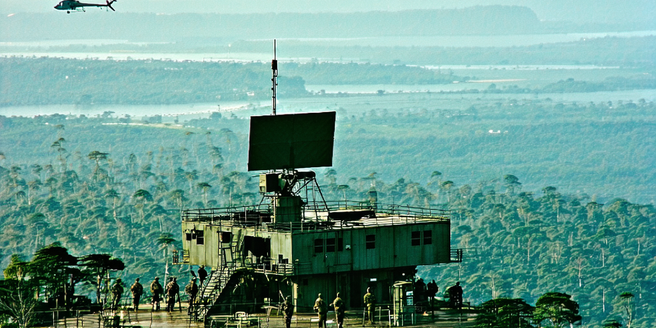
Understanding Radar Systems
Radar stands for Radio Detection and Ranging. It is a technology that uses radio waves to determine the range, angle, or velocity of objects. Radar systems are widely used in various fields, including aviation, maritime navigation, weather monitoring, and military applications. These systems consist of a transmitter that sends out radio waves and a receiver that detects any waves reflected back by an object. The time taken for the waves to return provides information about the distance of the object. Additionally, radar can measure the speed of the objects using the Doppler effect, where the frequency of the returned signal changes if the object is moving. Understanding radar systems is essential for those seeking careers in industries that rely on precise location and movement tracking.
Components of a Radar
A typical radar system consists of several key components. The transmitter generates radio frequency signals and transmits them through an antenna. The antenna is responsible for broadcasting the signals into the environment and receiving the echoes from objects. A switch, or duplexer, alternates the antenna between transmit and receive modes to prevent interference. The receiver processes the returning echoes, converting the signals into a format that can be analyzed and displayed. Finally, the display or processor interprets the data, providing visual or numerical information about the objects detected. These components are crucial in ensuring that a radar system functions effectively and efficiently, enabling it to serve its purpose in tracking and mapping surroundings.
How Radar Detects Objects
Radar detects objects by emitting radio waves and analyzing the echoes that bounce back from the objects. When the transmitted radio waves strike an object, they are reflected back toward the radar source. The radar’s receiver picks up these reflected waves, and the system calculates the time delay between transmission and reception. This time delay indicates the distance of the object from the radar. The Doppler effect also plays a role, as it provides data about the object’s speed based on the shift in frequency of the returned waves. The combination of these measurements allows radar systems to accurately detect and track the position and movement of objects, even in adverse weather conditions.
Different Types of Radar
Radar systems come in various types, each designed for specific applications. Pulsed radar sends out a burst of energy and then listens for echoes, useful in long-range detection. Some advanced systems even integrate multiple radar types for enhanced functionality. Continuous Wave (CW) radar continuously emits a signal, which is great for measuring velocity. Frequency Modulated Continuous Wave (FMCW) radar varies the frequency of the continuous signal, providing detailed information on an object’s range and speed. Synthetic Aperture Radar (SAR) uses motion to create high-resolution images, ideal for mapping and reconnaissance. These different radar types serve diverse purposes across sectors like aviation, automotive, weather forecasting, and defense, offering tailored solutions for technical challenges.
Applications of Radar Technology
Radar technology has a multitude of applications across different industries. In the military, it is crucial for surveillance, target tracking, and missile guidance. Aviation relies on radar for air traffic control and collision avoidance. Additionally, radar plays a pivotal role in ensuring the safe landing and takeoff of aircraft. Meteorology uses radar to observe weather patterns and forecast storms. In the maritime domain, radar navigates and tracks vessels, enhancing safety and security. Radar is also making significant strides in the automotive industry with the development of advanced driver-assistance systems (ADAS) for collision avoidance and parking assistance. The breadth of radar’s applications highlights its versatility and importance in both safety and efficiency across global industries.