
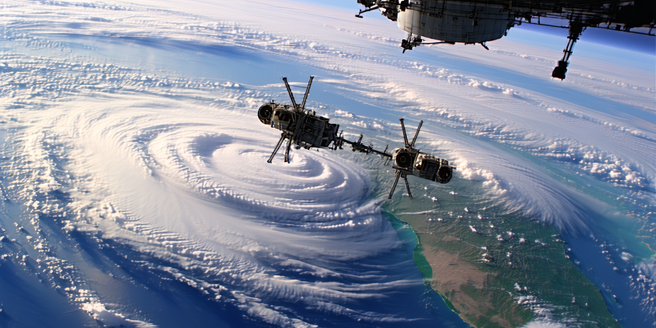
Introduction to Next-Gen Weather Satellites
Next-gen weather satellites are set to revolutionize meteorological observations. Unlike their predecessors, these advanced satellites will provide higher-resolution imagery, allowing for more accurate forecasts. They are equipped with cutting-edge sensors designed to capture a broad spectrum of data, from atmospheric moisture levels to surface temperatures. This innovation will significantly improve weather prediction models, making it easier for meteorologists to anticipate severe weather events and adapt to changing climate patterns. Moreover, next-gen satellites will enhance real-time data transmission, facilitating better communication between ground stations and space-based platforms. These advancements promise to improve our understanding of Earth’s atmospheric dynamics and are a crucial step toward developing a more resilient and informed society in the face of natural disasters.
Technological Advancements in Satellite Design
The realm of satellite design has undergone tremendous changes in recent years, driven primarily by technological advancements. Modern satellites now boast miniaturization, allowing more sensors and instruments to be integrated without increasing size or weight. This has resulted in more comprehensive data collection capabilities and lower launch costs. Moreover, improvements in artificial intelligence and machine learning have enabled satellites to process data more efficiently in orbit, leading to faster and more informative insights. Other exciting advancements include the development of new materials that have improved satellite durability and longevity. These innovations are crucial in ensuring satellites remain functional despite extreme space environments, thereby extending their operational lifespan and improving overall mission success rates.
Key Players in the Satellite Development Arena
Several key players are currently leading the charge in satellite development, including established government agencies and emerging private sector companies. Agencies like NASA, the European Space Agency, and the Japan Aerospace Exploration Agency continually push the boundaries of satellite technology through extensive research and development efforts. Concurrently, private companies such as SpaceX, Blue Origin, and Planet Labs have introduced fresh perspectives and innovative approaches, emphasizing faster, more cost-effective satellite launches. These entities often collaborate through public-private partnerships, combining the strengths of traditional government resources with the agility and innovation of private enterprises. Such collaborations are critical in accelerating the deployment of next-gen satellite systems, effectively enhancing our ability to monitor and understand planetary phenomena.
Data Collection and Analysis Capabilities
The advancements in satellite technology have markedly improved data collection and analysis capabilities. Enhanced sensors are now capable of capturing a more extensive range of data types with unprecedented precision. This comprehensive data collection allows for detailed analysis of weather patterns, vegetation cover, ocean currents, and more. Additionally, the use of AI-driven algorithms has transformed data processing, enabling quicker assimilation of information and more accurate forecasting. Real-time data streaming from these satellites ensures that updates on changing environmental conditions are promptly received by analysts and decision-makers. Such advancements significantly bolster the ability to conduct thorough climate assessments and to devise effective strategies for disaster preparedness and environmental management.
Environmental and Climate Monitoring Advantages
Next-gen weather satellites offer numerous benefits for environmental and climate monitoring. By providing continuous, high-resolution data, these satellites allow for constant surveillance of Earth’s changing atmosphere and surface conditions. This capability is vital for tracking long-term climate patterns and detecting abrupt environmental changes. Enhanced monitoring enables scientists and policymakers to identify alarming trends, such as rising temperatures or deforestation rates, and respond accordingly. Furthermore, satellites equipped with advanced sensors can monitor pollution levels and greenhouse gas emissions, providing critical data for addressing climate change. These capabilities form an essential part of global efforts to promote sustainable development and environmental stewardship.
Future Prospects and Global Collaboration Efforts
The future of weather satellite initiatives lies in the expansion of global collaboration and technological integration. As climate change continues to pose challenges worldwide, countries are recognizing the need to work collectively for better environmental monitoring systems. Efforts to establish international data-sharing frameworks and joint satellite missions are gaining momentum, fostering a cooperative approach to tackling global climate issues. Additionally, future advancements will likely focus on upgrading satellite constellations to enhance coverage, connectivity, and responsiveness. These developments underscore the critical need for continuous investment in research, infrastructure, and international cooperation to ensure that next-generation satellite technology meets the growing demand for comprehensive global surveillance and observation capabilities.