
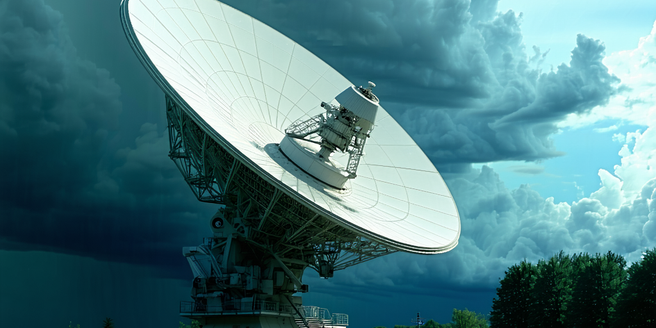
Understanding the Basics of Weather Radar
Weather radar systems are essential tools in meteorology and aviation, capable of detecting precipitation, its motion, and intensity. These systems operate by transmitting radio waves that bounce off precipitation particles and return to the radar. The time it takes for these waves to return helps determine the distance of the precipitation. The intensity of the returned signal reveals the strength of the precipitation. Weather radars are crucial for understanding and predicting weather patterns, providing critical information that can help in forecasting storms, estimating rainfall, and issuing weather warnings. Various types of weather radars exist, each with specific uses, including Doppler radar, which measures the velocity of rain droplets, and dual-polarization radar, which can differentiate between types of precipitation like rain and snow. Grasping these basics is key to comprehending broader meteorological forecasts.
The Role of Weather Radar in Modern Aviation
In modern aviation, weather radar systems are indispensable for ensuring safe and efficient flight operations. Pilots rely heavily on radar to detect and navigate around severe weather conditions such as thunderstorms, turbulence, and heavy precipitation. By interpreting radar data, pilots can make informed decisions about flight paths, avoiding potential hazards and minimizing flight disruptions. Moreover, weather radars aid in improving air traffic management and flight planning, enhancing overall operational efficiency. The integration of advanced radar systems in aircraft provides real-time data, allowing for dynamic route adjustments and ensuring optimal flight safety. Additionally, airport ground operations utilize radar data for weather monitoring, which is vital for runway management and optimizing take-off and landing schedules. Thus, weather radar technology plays a pivotal role in modern aviation by contributing to the safety and reliability of air travel.
Types of Weather Radars Used in Aviation
Various types of weather radars are used in aviation, each serving specific purposes. Doppler radar is a fundamental type that measures the velocity of precipitation particles, providing information about wind patterns and helping pilots anticipate turbulence. Dual-polarization radar offers additional insights by distinguishing between different types of precipitation, such as rain, snow, and sleet, enhancing the accuracy of weather interpretation. Pulse-Doppler radar combines both features, offering comprehensive data about precipitation movement and intensity. Avionic weather radars, installed in aircraft, enable pilots to detect weather conditions along their flight path, facilitating strategic planning and decision-making for safer navigation. Ground-based weather radars, used at airports, provide essential data for meteorologists and flight operation centers, helping manage air traffic efficiently. Each type of radar contributes to a holistic understanding of atmospheric conditions, crucial for effective aviation.
Interpreting Weather Radar Data: Key Insights
Interpretation of weather radar data is a crucial skill for aviators, as it aids in making informed decisions based on the current atmospheric conditions. Weather radar displays often depict precipitation intensity using color scales, where different colors represent varying levels of rainfall. For instance, green typically indicates light rain, while red or purple shows intense precipitation, which may signify severe storms. Additionally, Doppler radar data can reveal wind patterns and identify regions of potential turbulence or wind shear. Understanding these data representations allows pilots to adapt their flight routes proactively, avoiding hazardous weather and ensuring passenger safety. It’s also important to differentiate between false echoes, caused by ground clutter, and genuine weather data for accurate interpretation. By honing these skills, pilots and meteorologists can enhance the precision of weather forecasting and improve flight operation safety, contributing to overall aviation reliability.
Advancements in Weather Radar Technology
Significant advancements in weather radar technology have revolutionized the way we monitor and predict weather patterns in aviation. Modern radar systems now incorporate phased-array technology, which allows for much faster data collection by electronically steering the radar beam, offering near-instantaneous updates on weather conditions. Dual-polarization technology has been widely adopted, enhancing the ability to discern between different precipitation types and improving rainfall estimation accuracy. Integration with satellite data provides a more comprehensive view of atmospheric conditions, extending coverage and improving reliability. Additionally, improvements in algorithmic processing enable better interpretation and visualization of complex radar data, facilitating more accurate predictions and decision-making. These technological enhancements not only improve safety for flight operations but also contribute to more efficient air traffic management, reducing delays and minimizing environmental impact by optimizing flight paths. As technology continues to advance, the future holds even more potential for further innovations.
Weather Radar Challenges and Future Directions
Despite significant advancements, weather radar technology faces several challenges that need addressing to enhance its efficacy in aviation. One of the primary challenges is the mitigation of clutter, which can obscure real weather signals and hamper accurate interpretation. Additionally, extending radar coverage to remote and underserved regions remains a logistical and financial hurdle, yet it’s crucial for complete global weather monitoring. Data interpretation requires specialized training, as complex radar outputs demand expert analysis to ensure precise weather prediction and risk assessment. Future directions may include adopting machine learning algorithms to improve data accuracy and predictive capabilities. Moreover, there is a continuous need for collaboration between international meteorological organizations to facilitate data sharing and standardization. By overcoming these challenges, weather radar systems can reach new heights of efficiency and reliability, ensuring even greater safety and optimization within the aviation industry.