
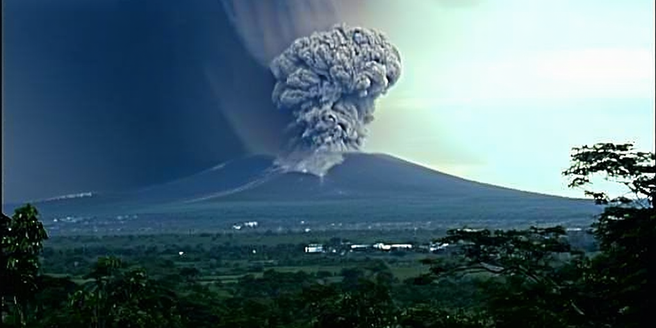
Understanding Volcanic Eruptions and Their Immediate Atmospheric Impacts
Volcanic eruptions are among the most powerful natural events, capable of ejecting large quantities of ash, sulfur dioxide, and other gases into the atmosphere. These components can significantly impact the weather in the eruption’s vicinity. The injected particles and gases form aerosols that reflect and absorb sunlight, leading to a cooling effect, while the ash can result in temporary darkness or reduced visibility. The extent of these impacts often depends on the magnitude of the eruption and its location. Immediate effects can include disruption of air travel, crop damage, and health hazards due to ash inhalation. The eruption of Mount Pinatubo in 1991 provides a notable example where global temperatures were temporarily cooled due to the vast quantities of volcanic particles spread across the stratosphere.
Historical Examples of Volcanic Eruptions Altering Climate Patterns
Volcanic eruptions have been historically linked to significant climate disruptions. The eruption of Mount Tambora in 1815 led to the ‘Year Without a Summer’ in 1816, causing widespread agricultural failures across the Northern Hemisphere. Another example is the Laki fissure eruption in Iceland in 1783, which released enormous amounts of sulfur dioxide, triggering a climatic anomaly known as the ‘Laki haze.’ This resulted in harsh winters and cooling across Europe. Volcanic eruptions not only affect the immediate vicinity but can have far-reaching impacts that span entire continents. Such historical events highlight how volcanic activity can induce shifts in climate patterns, influencing agriculture, health, and economic stability on a global scale. By examining these occurrences, scientists improve their understanding of the interconnectedness between volcanic eruptions and climatic shifts.
Mechanisms Behind Long-term Weather Shifts Post-Eruption
In the aftermath of volcanic eruptions, the climate and local weather systems can undergo long-term changes. The primary mechanism involves the injection of volcanic aerosols into the stratosphere, where they can persist for several years. These aerosols enhance the Earth’s albedo, reflecting a portion of incoming solar radiation back into space and initiating a cooling trend. The scale of impact often depends on the magnitude of the eruption and the volume of material released. Additionally, the distribution of volcanic gases can alter atmospheric circulation patterns, potentially affecting precipitation and temperature distributions worldwide. Over time, these factors contribute to persistent weather shifts across regions. Understanding these mechanisms aids scientists in predicting long-term climate behavior post-eruption, which is crucial for preparing adaptive strategies against future volcanic events.
Case Studies: Comparing Different Eruptions and Resulting Climate Changes
Studying various volcanic eruptions provides insight into their differing impacts on climate. For instance, the Krakatoa eruption in 1883 led to global cooling, vividly marked by vivid sunsets and temperature drops. In contrast, the eruption of Eyjafjallajökull in 2010, while disruptive to air travel, had minimal long-term climate effects. Understanding these differences helps refine climate models and improve future predictions. Investigating these events reveals that factors like eruption size, location, and emitted material significantly influence resulting climate changes. By comparing these cases, scientists can better predict potential weather shifts from future eruptions, noting how volcanic ash, aerosols, and sulfur dioxide interact with the Earth’s atmosphere. Such studies provide valuable lessons for climate science, highlighting the need for preparedness against specific volcanic behaviors.
Predictive Methods for Assessing Future Volcanic Weather Influences
Advancements in technology have enhanced the predictive methods used to assess potential volcanic weather influences. Satellite observations offer crucial data on volcanic activity, allowing for real-time monitoring of eruptions and emitted gases. Computer models simulate the dispersion of volcanic aerosols and gases, predicting their impact on global climate systems. Additionally, historical data analysis and sediment studies contribute to understanding long-term volcanic weather effects. These approaches help scientists forecast potential future impacts and develop mitigation strategies. By integrating remote sensing and climate modeling, researchers aim to improve the accuracy of predictions concerning weather shifts due to impending volcanic eruptions, ensuring proactive measures are in place to lessen the societal impacts of volcanic activity.