
Understanding the Challenges of Fog Navigation
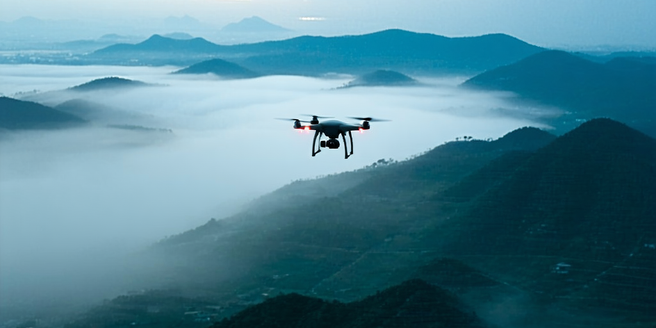
Navigating drones through foggy conditions presents significant challenges due to reduced visibility and potential signal interference. Drones rely on visual markers and GPS signals to maintain course, both of which are compromised in dense fog. Additionally, the moisture in fog can impact drone sensors, leading to inaccurate readings. These challenges necessitate robust solutions to ensure safe and effective drone operations. Pilots must be well-versed in alternative navigation methods, such as relying more heavily on ground-based navigation aids, and in employing enhanced sensor technology that can penetrate fog. Understanding these challenges is crucial for industries such as agriculture, delivery, and emergency services, which increasingly depend on drones to improve efficiency and safety. Addressing fog navigation issues contributes to the broader goal of ensuring drones remain reliable tools under varying atmospheric conditions.
The Role of Sensors in Enhancing Visibility
Advanced sensor technology plays a pivotal role in enhancing drone visibility in foggy conditions. Sensors such as LiDAR (Light Detection and Ranging) provide high-resolution, 3D mapping of surroundings, which is critical in low visibility. These sensors emit laser beams that bounce off surrounding objects, returning data that helps create an accurate navigation path. Infrared sensors can detect thermal differences, making them effective in visualizing objects through fog. Moreover, advanced radar systems can penetrate fog and detect obstacles, assisting drones in maintaining a clear flight path. Integrating these sensors with navigation systems significantly improves flight accuracy and safety. As sensor technology continues to evolve, drones will become increasingly adept at navigating in poor weather conditions, thus expanding their functionality across diverse industries where reliable and safe operation is paramount.
AI and Machine Learning in Fog Detection
Artificial Intelligence (AI) and Machine Learning (ML) are transforming drone navigation by improving fog detection and response capabilities. These technologies enable drones to analyze patterns and make real-time decisions to adjust their flight paths in dense fog. By training algorithms on large datasets of foggy conditions, AI can predict when and where fog will occur, allowing drones to prepare or reroute accordingly. Additionally, machine learning models can optimize sensor data processing, enhancing obstacle detection and collision avoidance in real time. This is particularly beneficial for autonomous drones, which need to independently assess their environment and make critical navigation decisions. By leveraging AI and ML, drones enhance their operational reliability in challenging environments, ensuring continuity of service and bolstering their application in sectors like package delivery and infrastructure inspection.
Case Studies: Successful Fog Navigation
Several case studies demonstrate the successful application of drones in navigating fog. One prominent example is from the agricultural sector, where drones equipped with multispectral sensors helped farmers monitor crops despite thick fog. Similarly, in disaster management, drones dispatched in foggy conditions have dramatically improved first response efficiency. For instance, during an emergency evacuation, drones utilized radar and LiDAR technologies to deliver supplies to isolated areas shrouded in fog. Another case involves a logistics company that employed AI-driven drones to maintain delivery schedules, despite recurrent fog in mountainous regions. These successful deployments show the potential of drones in overcoming visibility challenges. By sharing these findings and methodologies, industries can refine their strategies for drone navigation in fog, harnessing technology to ensure consistent and effective operations across various use cases.
Future Trends in Drone-Fog Technology
The future of drone technology in fog navigation promises exciting advancements. Ongoing research focuses on integrating quantum sensors, offering unprecedented accuracy in position and obstacle detection, even in dense fog. Quantum technology, coupled with AI advancements, foresees the development of truly autonomous drones capable of adapting to any environmental challenge. Research into biomimicry suggests drones could adopt strategies from animals that naturally navigate fog, such as bats, enhancing avoidance techniques. Furthermore, enhanced communication networks, like 5G, will enable faster data transmission, improving real-time decision-making and coordination among drones navigating complex foggy landscapes. As these technologies converge, drones’ reliability and efficiency in foggy conditions are set to improve, dramatically expanding their role in logistics, search and rescue, and monitoring tasks, thereby shaping the future landscape of drone operations.