
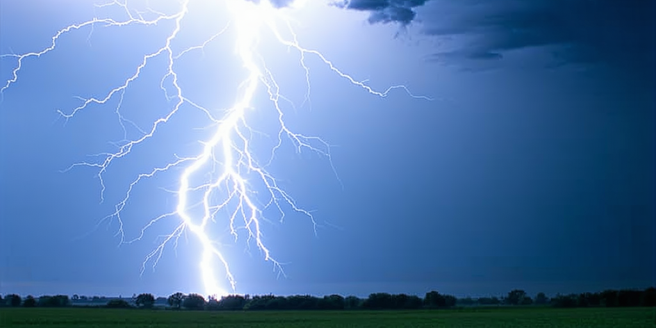
Understanding Cloud-to-Ground Lightning Formation
Cloud-to-ground lightning is a fascinating meteorological phenomenon where a rapid discharge of electricity occurs between a cloud and the ground. Typically triggered by a buildup of electric charges within a thunderstorm, this process begins with a stepped leader—a channel of negative charge that extends towards the Earth. The study of lightning has advanced significantly with the use of modern technology, allowing scientists to gather data more accurately. As it nears the ground, positive streamers rise to meet it, creating a conductive channel through which a powerful return stroke of current flows. This stroke heats the surrounding air to extreme temperatures, resulting in the brilliant flash of lightning. Understanding this formation process is crucial for predicting lightning events and mitigating their associated risks, especially in regions prone to severe thunderstorms.
The Role of Electric Charges in Lightning
Electric charges play a crucial role in the development of lightning. These charges accumulate within clouds, primarily due to the collision of ice particles, leading to the polarization of the storm cloud. The top of the cloud becomes positively charged, while the base typically holds a negative charge. This charge separation creates an electric field strong enough to initiate a lightning strike. Fascinatingly, the rapid discharge of electricity during a lightning strike can heat the air to temperatures five times hotter than the sun’s surface. When the potential difference between the cloud and the ground, or within cloud regions, becomes high enough, a discharge occurs as lightning. Understanding these charge dynamics helps meteorologists predict lightning occurrences and enhances safety measures against its impacts.
Environmental Factors Affecting Lightning
Several environmental factors contribute to lightning occurrence and intensity. Temperature, humidity, and atmospheric instability are significant contributors. These factors work together to create the ideal conditions for thunderstorm formation. Warm, moist air promotes the development of thunderclouds, while atmospheric instability encourages strong updrafts necessary for charge separation within clouds. Moreover, geographic features such as mountains can enhance storm development by affecting wind patterns. The presence of water bodies nearby can also influence the severity and frequency of thunderstorms. Climate change also plays a role by altering weather patterns, potentially leading to more frequent and intense storms. Understanding these environmental factors is crucial in predicting lightning events and mitigating their risks, especially in vulnerable areas.
Technological Advances in Lightning Detection
Recent technological advances have significantly improved lightning detection and tracking. Sophisticated radar systems and satellite technology now offer accurate real-time monitoring of lightning strikes. These systems are crucial for minimizing the impact of severe storms. Ground-based networks of sensors detect electromagnetic pulses emitted by lightning, providing precise data on strike location and intensity. These innovations enhance weather forecasting and risk assessment, allowing for timely warnings and proactive measures. The increased accuracy in detecting lightning helps in planning large outdoor events and ensuring public safety. Furthermore, with the integration of machine learning and data analytics, predictive models for lightning activity are becoming increasingly accurate, contributing to improved public safety and infrastructure protection during severe weather events.
Impacts of Cloud-to-Ground Lightning on Ecosystems
Cloud-to-ground lightning significantly impacts ecosystems. It can spark wildfires, altering landscapes and threatening biodiversity. These fires can devastate habitats, affecting flora and fauna dynamics. Scientists are increasingly interested in studying how climate change might influence lightning patterns and their subsequent effects on ecosystems. Conversely, lightning-induced fires play a natural role in maintaining certain ecosystems by promoting seed germination and clearing old vegetation, which encourages new growth. In some cases, the absence of such fires could lead to overgrown landscapes that suppress biodiversity. Additionally, lightning contributes to the nitrogen cycle by converting atmospheric nitrogen into nitrates, a form usable by plants. Understanding these impacts is crucial for ecosystem management and conservation efforts, highlighting the dual role of lightning as both a natural hazard and ecological facilitator.