
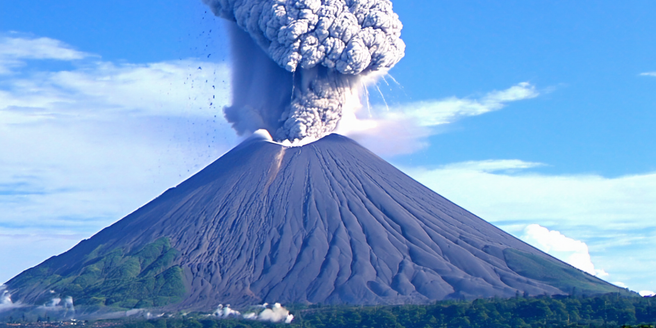
Understanding Volcanic Plumes and Their Formation
Volcanic plumes are comprised of ash, gases, and aerosols released during an eruption. The phenomenon begins when highly pressurized magma comes into contact with the atmosphere, causing rapid expansion and the formation of a towering plume. These plumes can reach heights of up to several kilometers, influenced by factors like the eruption’s intensity and prevailing atmospheric conditions. The nature and composition of the plume are crucial in determining its impact on local and regional weather. For instance, a higher ash content might result in more immediate localized disruptions, while gas-rich plumes can have more widespread effects. Understanding volcanic plume formation is essential for predicting its immediate and prolonged atmospheric influences.
The Impact of Ash and Gases on Weather Patterns
Volcanic eruptions inject ash and gases like sulfur dioxide into the atmosphere, directly impacting weather systems. Ash particles can obstruct sunlight, causing temperature drops in the affected regions. The reflective properties of ash lead to reduced solar warming of the Earth’s surface, disrupting local weather patterns. Concurrently, sulfur gases can undergo complex chemical transformations, leading to the formation of sulfate aerosols. These aerosols can spread across the globe over time, affecting cloud formation and precipitation patterns. The extent and duration of weather impacts depend on the eruption’s magnitude, ash particle size, and existing atmospheric conditions.
Short-Term Climate Changes Induced by Volcanic Eruptions
Volcanic eruptions can introduce rapid, albeit temporary, climate changes. When large quantities of volcanic materials enter the stratosphere, they can reduce global temperatures for months to a few years. This phenomenon is primarily due to the sulfur aerosols reflecting solar radiation away from the Earth. Historical records identify episodes of significant cooling following massive eruptions, known as volcanic winters. Such cooling can alter agricultural productivity, reduce growing seasons, and impact ecosystems reliant on specific climate conditions. While the effects are short-term compared to other climate factors, they underscore the critical need to understand and monitor volcanic activity.
Long-Term Regional Weather Variations Due to Volcanic Activity
While the immediate impacts of volcanic eruptions can be drastic, some regions can experience prolonged weather variations. Recurring volcanic activity may lead to persistent changes in cloud cover, rainfall distributions, and temperature variability. Over time, frequent eruptions could contribute to long-term climatic shifts in sub-regions. For instance, the consistent release of aerosols can modulate sunlight reaching the Earth’s surface, indirectly impacting the hydrological cycle. This process can also affect agricultural productivity and biodiversity, underscoring the intricate connections between volcanic activity and ecosystems. Understanding these prolonged effects requires comprehensive climate modeling, alongside historical data, to ascertain how volcanic activity integrates with natural climate variability over decades.
Case Studies: Historical Eruptions and Their Local Weather Effects
Examining past volcanic events provides valuable insights into their climatic consequences. The 1815 eruption of Mount Tambora is a quintessential case, resulting in the ‘Year Without a Summer,’ with significant temperature declines in the Northern Hemisphere. Crop failures and food shortages followed due to prolonged cold weather and unseasonable frosts. Such historical instances emphasize the interconnectedness of natural events and human societies. Similarly, the 1991 eruption of Mount Pinatubo caused global temperature drops, demonstrating the widespread reach of these phenomena. Through case studies, researchers can better predict potential future impacts and enhance mitigation strategies for vulnerable regions.
Strategies for Predicting and Mitigating Volcanic Weather Impacts
Predictive models and early warning systems are vital tools in mitigating the effects of volcanic ash and gases on weather. Remote sensing technology and satellite observations are instrumental in detecting eruptions and tracking plume movements. By analyzing atmospheric data, scientists can forecast ash dispersion, enabling authorities to take precautionary measures, like rerouting air traffic and issuing health advisories. Moreover, computer models simulating atmospheric reactions to volcanic materials can improve the accuracy of weather predictions post-eruption. Public awareness and preparedness plans are essential components in reducing potential adverse impacts, ensuring community resilience in the face of volcanic activity.