
Challenges of Weather Data Collection in Remote Areas
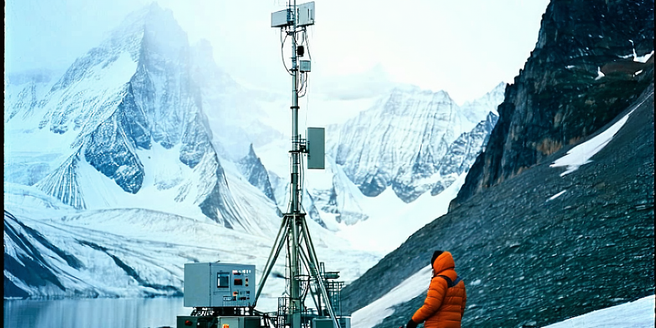
Collecting weather data in remote regions presents numerous challenges. Harsh environmental conditions, such as extreme temperatures and rugged terrain, often make it difficult to install and maintain weather monitoring instruments. Additionally, limited accessibility can hinder transport of equipment and the movement of personnel. Remote areas may lack necessary infrastructure like stable power supply and reliable communication networks, making real-time data transmission a hurdle. Moreover, data quality and coverage can suffer due to the sparse distribution of monitoring stations. Overcoming these challenges requires adaptive strategies which consider logistical constraints. Understanding local geographical and climatic conditions is crucial to effectively position weather stations to collect accurate and representative data. Collaborative efforts involving government agencies, research organizations, and local communities are essential to address and mitigate these challenges.
Technological Solutions for Accurate Data Gathering
To improve weather data collection in remote regions, innovative technological solutions are being explored. Autonomous weather stations equipped with solar panels and satellite communication capabilities can operate independently, transmitting data without the need for human intervention. Advances in sensor technology have made it possible to develop compact and robust instruments that can withstand harsh environmental conditions. Incorporating machine learning algorithms in data processing enhances predictive accuracy by analyzing large datasets efficiently. The use of hybrid power systems, combining solar and wind energy, can ensure a continuous power supply to weather stations in areas with limited infrastructure. Additionally, the development of more efficient energy storage systems allows these stations to operate during periods of low sunlight or wind. By leveraging these technological advancements, the reliability and coverage of weather data in remote regions can be significantly increased.
The Role of Satellites in Monitoring Remote Regions
Satellites play a pivotal role in monitoring weather conditions in remote regions. They provide comprehensive coverage and real-time data, making it possible to observe large and inaccessible areas from space. Equipped with advanced sensors, weather satellites collect critical information on atmospheric conditions including temperature, humidity, and wind patterns. They also offer valuable insights into the dynamics of large-scale weather systems such as cyclones and monsoons. In remote regions where ground-based weather stations are sparse, satellites serve as a primary source of meteorological data. By enabling continuous monitoring and providing early warning of severe weather events, satellites enhance our ability to mitigate risks associated with natural disasters. Collaborations between international space agencies have facilitated the sharing of satellite data, which is instrumental in improving global weather forecasting models.
Utilizing Drones for Atmospheric Data Collection
Drones have emerged as a versatile tool for atmospheric data collection in remote regions. These unmanned aerial vehicles can reach altitudes inaccessible to ground-based equipment, providing a new dimension of meteorological observation. Equipped with sensors, drones can gather real-time data on temperature, humidity, pressure, and wind speed. Their ability to hover in specific locations or follow designated flight paths allows for detailed vertical profiling of the atmosphere. In remote regions with challenging terrain, drones offer a cost-effective alternative to traditional weather stations. The flexibility in deployment and rapid data collection capability make drones particularly useful during extreme weather events when immediate data is crucial. As drone technology continues to advance, it offers promising potential to enhance our understanding of atmospheric processes and improve predictive weather models.
Importance of Local Partnerships and Community Involvement
Local partnerships and community involvement are vital components of successful weather data collection initiatives in remote regions. Engaging local communities fosters trust and facilitates the sharing of indigenous knowledge about regional climatic patterns, which can enhance the accuracy of data interpretation and application. Collaborating with local organizations aids in identifying optimal sites for establishing monitoring stations, considering accessibility and environmental conditions. Moreover, involving communities in the maintenance and operation of weather stations ensures their sustainability and functionality over time. Training local personnel in data collection and management builds capacity and empowers communities to actively participate in weather monitoring efforts. By fostering a collaborative approach, stakeholders can establish resilient networks that enhance data coverage and reliability while promoting the socioeconomic development of remote regions.
Analyzing and Interpreting Data from Remote Locations
Analyzing and interpreting weather data from remote locations involves unique challenges. The scarcity of data points can result in gaps in coverage, affecting the precision of weather forecasts. To address this, sophisticated data assimilation techniques are used to integrate satellite, radar, and ground-based observations, creating a comprehensive picture of atmospheric conditions. Advanced computational models allow researchers to simulate weather patterns and predict future scenarios with higher accuracy. Leveraging artificial intelligence and machine learning algorithms enhances data processing capabilities, allowing for the efficient handling of large datasets. Visualization tools further enable researchers and stakeholders to interpret complex data and identify trends. Effective communication and collaboration among meteorologists, data scientists, and local stakeholders are crucial for translating raw data into meaningful insights. These efforts contribute to improved weather forecasting and policy-making, ultimately aiding in disaster preparedness and climate resilience.